20 Years Endangered

We Must Do More To Save
the Southern Resident Killer Whales

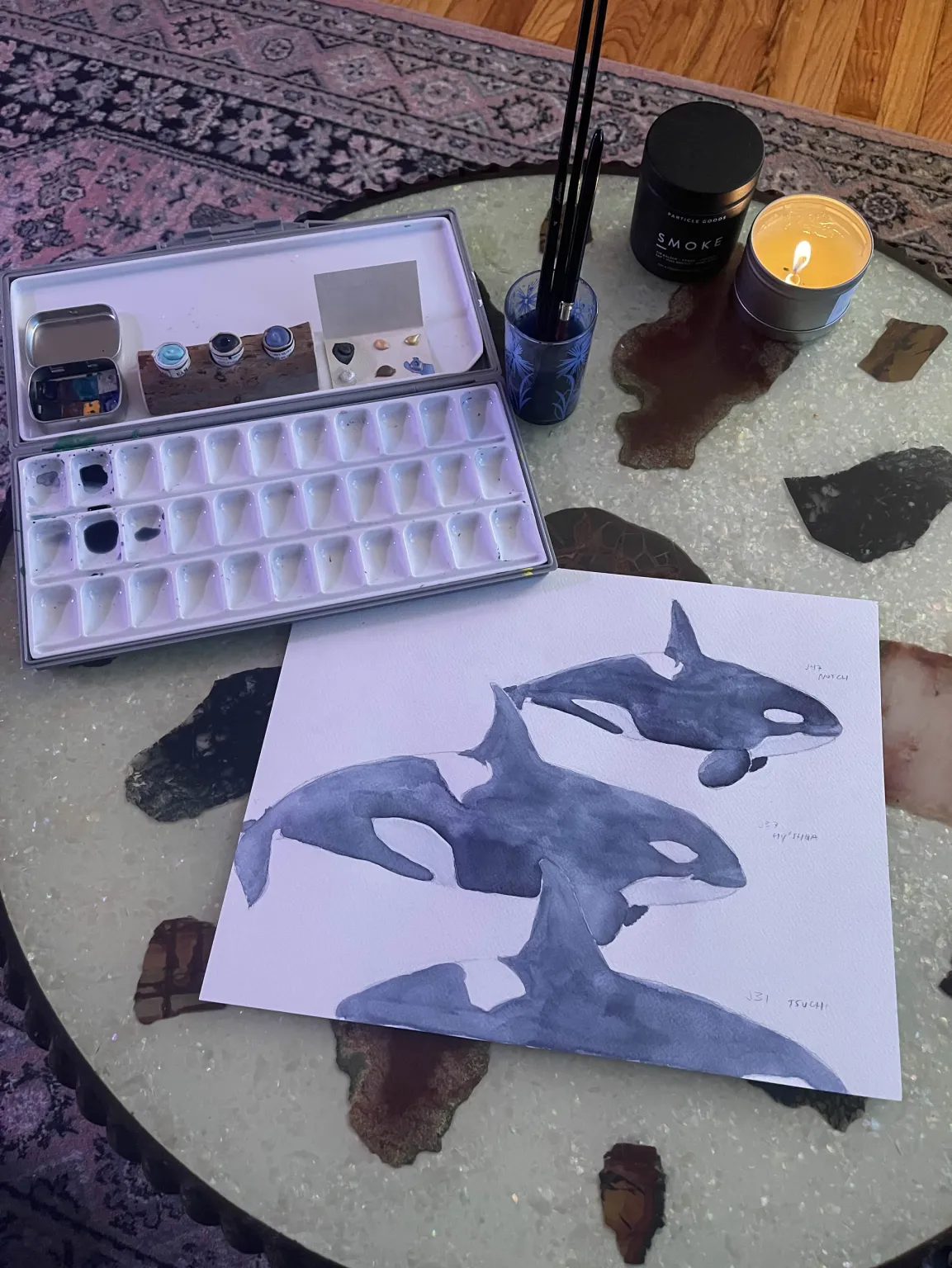
75 Fins for 75 Whales

#OBIArtForOrcas
An ambitious community art project to raise awareness of the plight of the Southern Residents during Orca Action Month in June 2026

Fin Locations Interactive Map

Interactive Map of Fin Locations

As we’ve grown in recent years, our work has expanded to include science-based continuing education programs and partnerships aimed towards promoting bold advocacy on behalf of regional killer whales and the ecosystem they rely on.

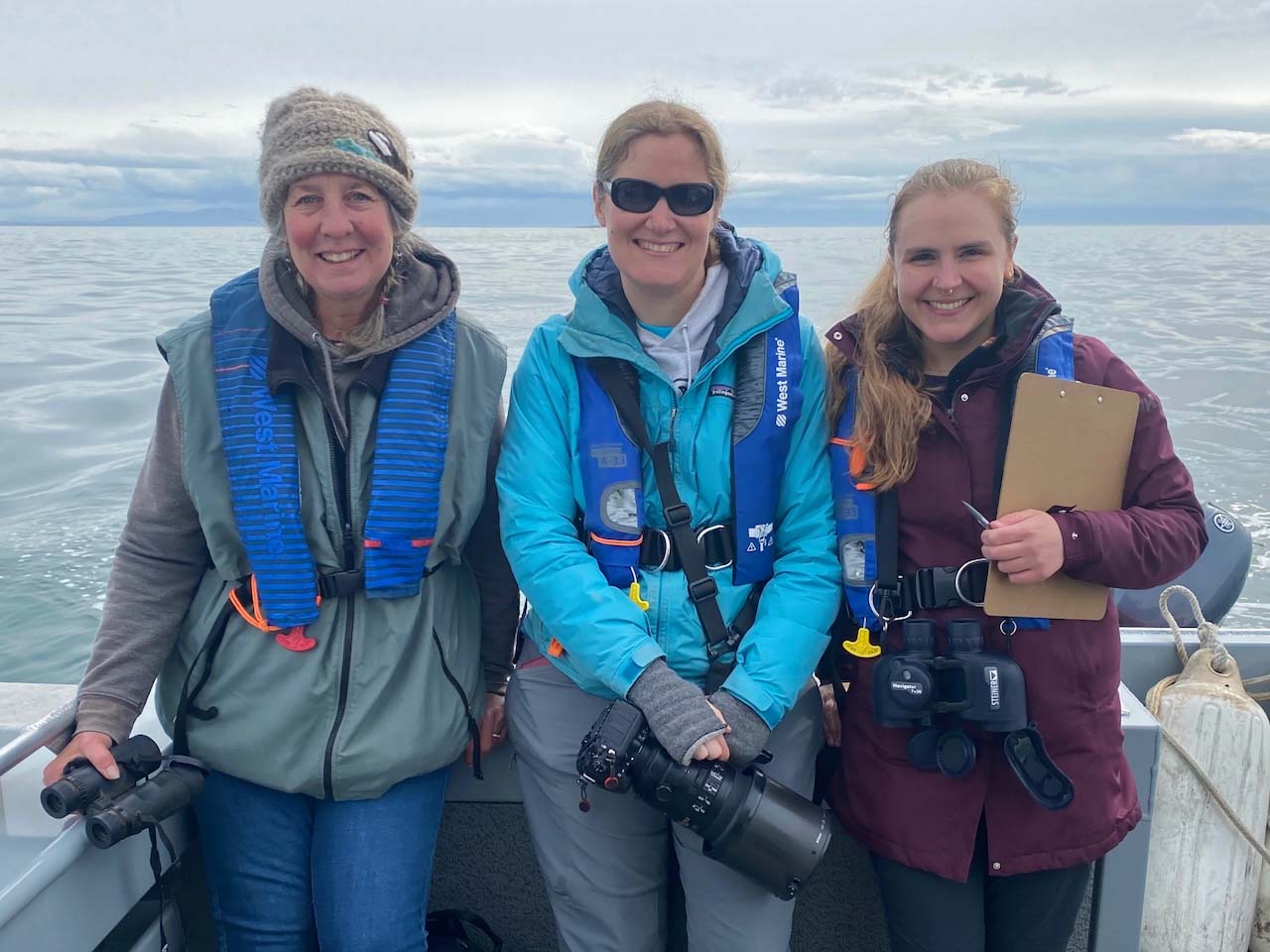
OBI was founded by a small group of community scientists with the original goal of collecting data to help document some of the long-term changes we were seeing in Southern Resident killer whale behavior and habitat usage around the San Juan Islands. Behavioral data collection remains at the core of our work even as our initial projects have expanded.

Meet the Whales

The Southern Resident killer whale population is made up of J-Pod, K-Pod, and L-Pod. Despite 20 years on the endangered species list, their population has continued to decline. These iconic orcas are connected to wild salmon, the broader ecosystem, and our shared future in the Pacific Northwest. By raising awareness and building connection to these orcas through public art, we hope to inspire the additional bold actions needed to help the Southern Residents recover and thrive.
Office setting
Category 3
Design

UX review presentations

How do you create compelling presentations that wow your colleagues and impress your managers?
Artist
11 Jan 2022
Drew Cano
11 Jan 2022
Drew Cano
11 Jan 2022

J16

Slick
Female

Slick's dorsal fin is so tall, that before she returned for her first calf she was for a brief time considered a sprouting male.

Slick's dorsal fin is so tall, that before she returned for her first calf she was for a brief time considered a sprouting male.

Artist
Location
Kat Martin
Harbor Wildwatch

J19

Shachi
Female

While it wasn't immediately clear, Shachi eventually became the new matriarch of J-Pod after the loss of J2 Granny. She's often in the lead when the pod travels through major waterways like Haro Strait.

While it wasn't immediately clear, Shachi eventually became the new matriarch of J-Pod after the loss of J2 Granny. She's often in the lead when the pod travels through major waterways like Haro Strait.

Artist
Location
Carly Marshiano
KEXP

J22

Oreo
Female

Shortly after having her first calf J34 in 1998, Oreo also became a surrogate mother figure for her 3 year-old orphaned niece J32 Rhapsody.

Shortly after having her first calf J34 in 1998, Oreo also became a surrogate mother figure for her 3 year-old orphaned niece J32 Rhapsody.

Artist
Location
Cindy Hansen
Friday Harbor Suites

J26

Mike
Male

Mike is named after Canadian killer whale scientist Michael Bigg who pioneered the technique of being able to photo-ID individual killer whales based on their natural markings.

Mike is named after Canadian killer whale scientist Michael Bigg who pioneered the technique of being able to photo-ID individual killer whales based on their natural markings.

Artist
Location
Amanda Colbert
Padilla Bay Interpretive Center

J27

Blackberry
Male

After the loss of their mother in 2008, Blackberry played a key role in helping to raise his younger brother J39 Mako, who was five years-old a the time. The two brothers were inseperable until J39 reached adulthood.

After the loss of their mother in 2008, Blackberry played a key role in helping to raise his younger brother J39 Mako, who was five years-old a the time. The two brothers were inseperable until J39 reached adulthood.

Artist
Location
Christine Fowler
PSE, Port Townsend

J31

Tsuchi
Female

Orcas can have unique markings in unexpected locations. Tsuchi is a prime example with a jagged black "cheek line" below her eyepatch.

Orcas can have unique markings in unexpected locations. Tsuchi is a prime example with a jagged black "cheek line" below her eyepatch.

Artist
Location

J35

Tahlequah
Female

Tahlequah has famously carried two of her deceased calves for long periods of time after losing them shortly after birth, demonstrating the depth of an orca's capacity to feel grief.

Tahlequah has famously carried two of her deceased calves for long periods of time after losing them shortly after birth, demonstrating the depth of an orca's capacity to feel grief.

Artist
Location
Heidi Bruns Shank & Cindi Rausch
Madrona Supply Co

J36

Alki
Female

First seen in December 1999, Alki was the last Southern Resident born before the new millenium. Her name, also the unofficial Washington State motto, comes from a Chinook jargon word meaing "future prosperity".

First seen in December 1999, Alki was the last Southern Resident born before the new millenium. Her name, also the unofficial Washington State motto, comes from a Chinook jargon word meaing "future prosperity".

Artist
Location
Val Unger
Future Primitive Brewing, Alki

J37

Hy'shqa
Female

Hy'shqa is one of the "exceptions that breaks the rule". Instead of being rounded like most resident killer whale dorsal fins, her dorsal fin is more pointed like that of a transient/Bigg's killer whale.

Hy'shqa is one of the "exceptions that breaks the rule". Instead of being rounded like most resident killer whale dorsal fins, her dorsal fin is more pointed like that of a transient/Bigg's killer whale.

Artist
Location
Orca Network
Langley Whale Center, Langley

J38

Cookie
Male

Cookie has a unique line where his back appears higher behind his dorsal fin than in front of it. Already known for his rounded dorsal fin and unique saddles, fans think this just adds to Cookie's charm!

Cookie has a unique line where his back appears higher behind his dorsal fin than in front of it. Already known for his rounded dorsal fin and unique saddles, fans think this just adds to Cookie's charm!

Artist
Location
Cindy Hansen
Friday Harbor Suites

J39

Mako
Male

While growing up, Mako would rarely leave the side of his older brother Blackberry. Now, his primary travel companion is his aunt J19 Shachi.

While growing up, Mako would rarely leave the side of his older brother Blackberry. Now, his primary travel companion is his aunt J19 Shachi.

Artist
Location

J40

Suttles
Female

Suttles and J41 Eclipse (born one year apart) used to play together a lot as calves. In 2024 and 2025, both Suttles and Eclipse had calves of their own, and now their daughters play together, too!

Suttles and J41 Eclipse (born one year apart) used to play together a lot as calves. In 2024 and 2025, both Suttles and Eclipse had calves of their own, and now their daughters play together, too!

Artist
Location
Sara Shimazu
Amazon

J41

Eclipse
Female

When Eclipse gave birth to J51 Nova in 2015, she became the youngest Southern Resident killer whale mother on record, giving birth before the age of 10.

When Eclipse gave birth to J51 Nova in 2015, she became the youngest Southern Resident killer whale mother on record, giving birth before the age of 10.

Artist
Location
Taylor Redmond
San Juan Excursions

J42

Echo
Female

While her mom and two older siblings often travel close together, Echo is more of a social butterfly, often spending time with other female whales in J-Pod outside her matriline.

While her mom and two older siblings often travel close together, Echo is more of a social butterfly, often spending time with other female whales in J-Pod outside her matriline.

Artist
Location
Hannah Collinge
Mallard Ice Cream Belllingham

J44

Moby
Male

Moby's name is a reference to Moby Dick, because his right side eyepatch looks like a white sperm whale.

Moby's name is a reference to Moby Dick, because his right side eyepatch looks like a white sperm whale.

Artist
Location
Sara Shimazu
Port of Seattle - Fisherman's Terminal

J45

Se-Yi'-Chn
Male

At the end of 2025, Se-Yi'-Chn got a new notch at the base of his dorsal fin. We rarely know the cause of a specific injury, but in this case the rake marks on either side of the wound indicated it was from rough-housing with another killer whale!

At the end of 2025, Se-Yi'-Chn got a new notch at the base of his dorsal fin. We rarely know the cause of a specific injury, but in this case the rake marks on either side of the wound indicated it was from rough-housing with another killer whale!

Artist
Location
Alli Tweedt
Western Prince

J46

Star
Female

After the loss of their mother J28 Polaris, Star was seen trying to support her younger brother J54 Dipper. Unfortunately, since he was still of nursing age at the time, her efforts were unsuccessful.

After the loss of their mother J28 Polaris, Star was seen trying to support her younger brother J54 Dipper. Unfortunately, since he was still of nursing age at the time, her efforts were unsuccessful.

Artist
Location
Sarah Plane
Moon Water Arts, Anacortes

J47

Notch
Male

Notch got his namesake marking at a young age. The size and shape of his notch has changed dramatically as his dorsal fin has grown with age.

Notch got his namesake marking at a young age. The size and shape of his notch has changed dramatically as his dorsal fin has grown with age.

Artist
Location
Monika Wieland Shields
Finn River Cidery

J49

T'ilem I'nges
Male

Thanks to genetic analysis done by NOAA, we learned more about paternity in Southern Residents. While many calves at this time were found to be fathered by J1 Ruffles and L41 Mega, T'ilem I'nges is the only known whale fathered by L79 Skana.

Thanks to genetic analysis done by NOAA, we learned more about paternity in Southern Residents. While many calves at this time were found to be fathered by J1 Ruffles and L41 Mega, T'ilem I'nges is the only known whale fathered by L79 Skana.

Artist
Location
Sara Shimazu
Port of Seattle - Fisherman's Terminal

J51

Nova
Male

While some juvenile males start roaming from their matrilines to spend more time associating with unrelated whales, Nova has maintained his strong family bonds. He often travels with his grandmother J19 Shachi or plays with his younger sisters.

While some juvenile males start roaming from their matrilines to spend more time associating with unrelated whales, Nova has maintained his strong family bonds. He often travels with his grandmother J19 Shachi or plays with his younger sisters.

Artist
Location
Sara Shimazu
Port of Seattle - Fisherman's Terminal

J53

Kiki
Female

Kiki is one Southern Resident that has shown particular resilience. She lost her mom J17 Princess Angeline in 2019 when she was less than four years old. Thanks to her extended family, she was able to survive.

Kiki is one Southern Resident that has shown particular resilience. She lost her mom J17 Princess Angeline in 2019 when she was less than four years old. Thanks to her extended family, she was able to survive.

Artist
Location

J56

Tofino
Female

Tofino is known for being a very surface active whale, breaching far more often than other Southern Residents.

Tofino is known for being a very surface active whale, breaching far more often than other Southern Residents.

Artist
Location
Beth Woodruff / Kadie Clements
UnderDog BookStore

J57

Phoenix
Male

When Phoenix was a calf and his mom J35 Tahlequah was off foraging, he would often get up to amusing antics to entertain himself. These included balancing driftwood on his known, carrying kelp around in his mouth, and breach competitions with his podmate J58 Crescent.

When Phoenix was a calf and his mom J35 Tahlequah was off foraging, he would often get up to amusing antics to entertain himself. These included balancing driftwood on his known, carrying kelp around in his mouth, and breach competitions with his podmate J58 Crescent.

Artist
Location

J58

Crescent
Female

As the firstborn granddaughter to current J-Pod leader J19 Shachi, one wonders if young Crescent might one day be the matriarch of J-Pod!

As the firstborn granddaughter to current J-Pod leader J19 Shachi, one wonders if young Crescent might one day be the matriarch of J-Pod!

Artist
Location
Alyssa Andrews
Eagle Harbor Books

J59

Sxwyeqόlh
Female

All whales who are descendents of J14 Samish have been named by the Samish Indian Nation. That includes Sxwyeqólh (pronounced "Swee-a-kosh"), whose name means "brings hope for the future".

All whales who are descendents of J14 Samish have been named by the Samish Indian Nation. That includes Sxwyeqólh (pronounced "Swee-a-kosh"), whose name means "brings hope for the future".

Artist
Location
Orca Network
Langley Whale Center, Langley

J62

Female

Unlike J63, who ventures away from mom often, in her early years J62 stayed in the slipstream of her mom J41 Eclipse, rarely being babysat by others.

Unlike J63, who ventures away from mom often, in her early years J62 stayed in the slipstream of her mom J41 Eclipse, rarely being babysat by others.

Artist
Location
Taylor Redmond
San Juan Excursions

J63

Female

J63 has an adventures spirit, comfortable traveling away from mom and with other J-Pod whales from a young age.

J63 has an adventures spirit, comfortable traveling away from mom and with other J-Pod whales from a young age.

Artist
Location
Sara Shimazu
Amazon

K12

Sequim
Female

Sequim has some of the most unique saddle patches among all Southern Residents: both sides are very wispy and also narrow. On the left side in particular, her saddle patch barely extends under her dorsal fin at all!

Sequim has some of the most unique saddle patches among all Southern Residents: both sides are very wispy and also narrow. On the left side in particular, her saddle patch barely extends under her dorsal fin at all!

Artist
Location
Monika Wieland Shields
San Juan Safaris/Riptide Coffee Shop

K14

Lea
Female

K14 was originally named Leon when it was believed she was a male. When it was discovered she was in fact a female, they adjusted her name to Lea instead. Coincidentally, the same thing happened to L14, who was originally named Cordelia. When he was discovered to be a male, they changed his name to Cordy.

K14 was originally named Leon when it was believed she was a male. When it was discovered she was in fact a female, they adjusted her name to Lea instead. Coincidentally, the same thing happened to L14, who was originally named Cordelia. When he was discovered to be a male, they changed his name to Cordy.

Artist
Location

K16

Opus
Female

Male Southern Residents receive survival benefits from their mothers into adulthood. The Center for Whale Research has demonstrated this "son cost" through their census data, where having a son decreases future reproductive output of a mom. Opus is one example of this. After giving birth to K35 Sonata in 2002 at age 17, she was never documented having another calf.

Male Southern Residents receive survival benefits from their mothers into adulthood. The Center for Whale Research has demonstrated this "son cost" through their census data, where having a son decreases future reproductive output of a mom. Opus is one example of this. After giving birth to K35 Sonata in 2002 at age 17, she was never documented having another calf.

Artist
Location

K20

Spock
Female

Along with J16 Slick, Spock is one of the female Southern Residents that was briefly listed as a male in the ID guides. Both females have taller fins, leading reseachers to believe they might have been sprouter males, until they returned with their first calves.

Along with J16 Slick, Spock is one of the female Southern Residents that was briefly listed as a male in the ID guides. Both females have taller fins, leading reseachers to believe they might have been sprouter males, until they returned with their first calves.

Artist
Location

K22

Sekiu
Female

In addition to her distinct wispy saddle patches, another of Sekiu's identifying features is what we call a "black spine". This refers to the gray saddle patch not extending fully to the line of the back, resulting in black pigment along the spine of the whale when viewed from the side.

In addition to her distinct wispy saddle patches, another of Sekiu's identifying features is what we call a "black spine". This refers to the gray saddle patch not extending fully to the line of the back, resulting in black pigment along the spine of the whale when viewed from the side.

Artist
Location
Sara Shimazu
Maya's Legacy office, Friday Harbor

K27

Deadhead
Female

Usually, Southern Residents enter and exit the Salish Sea through the Strait of Juan de Fuca, but occasionally they come over the "top" of Vancouver Island and down Johnstone Strait entering the Strait of Georgia from the north. Deadhead was part of a group that returned to inland waters this way several summers in a row, most recently in 2021.

Usually, Southern Residents enter and exit the Salish Sea through the Strait of Juan de Fuca, but occasionally they come over the "top" of Vancouver Island and down Johnstone Strait entering the Strait of Georgia from the north. Deadhead was part of a group that returned to inland waters this way several summers in a row, most recently in 2021.

Artist
Location

K33

Tika
Male

Monika has always thought of K33 as a shape-shifting killer whale. He looks so different at different angles that she's mistaken him for almost every other adult whale in the population at some point in time.

Monika has always thought of K33 as a shape-shifting killer whale. He looks so different at different angles that she's mistaken him for almost every other adult whale in the population at some point in time.

Artist
Location
Rachel Pettit
Maya's Legacy office, Friday Harbor

K35

Sonata
Male

The K16s (Sonata's matriline) and the K18s (a now extinct matriline) used to occasionally travel separately from the rest of K-Pod. Sonata seemed particularly close with K21 Cappuccino, the last living member of the K18s. Interestingly, since Cappuccino's death in 2021, K-Pod has moved as a more cohesive unit again with it becoming rare for Sonata and his mom to break off.

The K16s (Sonata's matriline) and the K18s (a now extinct matriline) used to occasionally travel separately from the rest of K-Pod. Sonata seemed particularly close with K21 Cappuccino, the last living member of the K18s. Interestingly, since Cappuccino's death in 2021, K-Pod has moved as a more cohesive unit again with it becoming rare for Sonata and his mom to break off.

Artist
Location
Rebecca Berger
Marrowstone Vineywards, Port Townsend

K36

Yoda
Female

All Southern Resident calves are a cause for celebration, but Yoda's birth of her first calf K47 in 2025 was particularly exciting. As the smallest of the three pods with the fewest number of reproductive females, having another successful mom in K-Pod was a huge beacon of hope.

All Southern Resident calves are a cause for celebration, but Yoda's birth of her first calf K47 in 2025 was particularly exciting. As the smallest of the three pods with the fewest number of reproductive females, having another successful mom in K-Pod was a huge beacon of hope.

Artist
Location
Carrie McCoy
Sunnyside Environmental School (Oregon)

K37

Rainshadow
Male

A rain shadow occurs on the leeward side of a mountain range, where protection from prevailing winds leads to much drier conditions. K37 Rainshadow's name is a reference to his mom K12 Sequim; Sequim is a town in the rain shadow of the Olympic Mountains, and gets less than half the rain that Seattle does.

A rain shadow occurs on the leeward side of a mountain range, where protection from prevailing winds leads to much drier conditions. K37 Rainshadow's name is a reference to his mom K12 Sequim; Sequim is a town in the rain shadow of the Olympic Mountains, and gets less than half the rain that Seattle does.

Artist
Location
Sara Baldwin

K38

Comet
Male

Comet is one of a few Southern Resident males whose fins have not grown to their expected height. At over 20 years old, his fin still looks like that of a young sprouter male.

Comet is one of a few Southern Resident males whose fins have not grown to their expected height. At over 20 years old, his fin still looks like that of a young sprouter male.

Artist
Location

K42

Kelp
Male

In 2015, Kelp, his mom, and two siblings spent the entire summer traveling with J2 Granny and her extended family. They returned to traveling with K-Pod in the fall.

In 2015, Kelp, his mom, and two siblings spent the entire summer traveling with J2 Granny and her extended family. They returned to traveling with K-Pod in the fall.

Artist
Location
Stephany Couatre-Groleau
Gulf of Georgia Cannery

K43

Saturna
Female

The average age a female killer whale gives birth for the first time is 15. As of 2026, Saturna is 16 years old, and we are all very hopeful we will see her with her first calf soon!

The average age a female killer whale gives birth for the first time is 15. As of 2026, Saturna is 16 years old, and we are all very hopeful we will see her with her first calf soon!

Artist
Location

K45

Uhura/Prosper
Female

Uhura was the first calf born into K-Pod after an astonishing 11 year gap. As a female, she is a key hope for the future reproductive future of K-Pod.

Uhura was the first calf born into K-Pod after an astonishing 11 year gap. As a female, she is a key hope for the future reproductive future of K-Pod.

Artist
Location
Michele Brodsky
Northern Puget Sound

K47

Unknown

K47 appeared to "skip" a number in the K-Pod alphanumerics due to a bizarre piece of history. The K46 designation was given in the 1980s to the whale formerly known as L46, when for the first and only time a matriline was reassigned to a different pod.

K47 appeared to "skip" a number in the K-Pod alphanumerics due to a bizarre piece of history. The K46 designation was given in the 1980s to the whale formerly known as L46, when for the first and only time a matriline was reassigned to a different pod.

Artist
Location
Carrie McCoy
Sunnyside Environmental School (Oregon)

L103

Lapis
Female

Many Southern Residents females have calves with different males, but in a few cases, there have been repeat matings resulting in full siblings. One such example is Lapis and her brother Takoda. Both of them were born to L55 Nugget and were sired by J1 Ruffles.

Many Southern Residents females have calves with different males, but in a few cases, there have been repeat matings resulting in full siblings. One such example is Lapis and her brother Takoda. Both of them were born to L55 Nugget and were sired by J1 Ruffles.

Artist
Location

L105

Fluke
Male

With his tall dorsal fin and bold, wide open saddle patches, Fluke is one of the most easily identifiable of all the Southern Resident killer whales.

With his tall dorsal fin and bold, wide open saddle patches, Fluke is one of the most easily identifiable of all the Southern Resident killer whales.

Artist
Location
Beth Woodruff / Kadie Clements
UnderDog BookStore

L106

Pooka
Male

During multi-pod aggregations, young male Southern Residents often form what researchers have called a MOSI, or male-only social interaction. These groups often include a lot of sociosexual behavior and are an important part of life for a juvenile male. During his younger years, Pooka would often be seen with J39 Mako during these assocations. The two males are just 2 years apart in age.

During multi-pod aggregations, young male Southern Residents often form what researchers have called a MOSI, or male-only social interaction. These groups often include a lot of sociosexual behavior and are an important part of life for a juvenile male. During his younger years, Pooka would often be seen with J39 Mako during these assocations. The two males are just 2 years apart in age.

Artist
Location

L108

Coho
Male

Coho was first documented by researchers on the outer coast near Grays Harbor, WA in April of 2006. At that time, we didn't know much about where K and L Pods spend the late winter and early spring months, but additional research has shown they spend a lot of time between Grays Harbor and the mouth of the Columbia River.

Coho was first documented by researchers on the outer coast near Grays Harbor, WA in April of 2006. At that time, we didn't know much about where K and L Pods spend the late winter and early spring months, but additional research has shown they spend a lot of time between Grays Harbor and the mouth of the Columbia River.

Artist
Location
Islandwood
Islandwood

L109

Takoda
Male

Takoda has one of the most classic adult male resident killer whale dorsal fins in the population: broad and tall with a rounded tip and a silght cant forward.

Takoda has one of the most classic adult male resident killer whale dorsal fins in the population: broad and tall with a rounded tip and a silght cant forward.

Artist
Location

L110

Midnight
Male

Midnight had an injury to his mouth when he was young, resulting in an extra flap of skin along his jaw line.

Midnight had an injury to his mouth when he was young, resulting in an extra flap of skin along his jaw line.

Artist
Location

L113

Cousteau
Female

L113 is one of many whales in the Salish Sea who has multiple common names or nicknames. She was named Cousteau through The Whale Musueum's Orca Adoption Program and was also named Molly by the Center for Whale Research. It's important we all use the same alphanumeric designations to track the whales for scientific purposes, but you can use whichever common name you like best!

L113 is one of many whales in the Salish Sea who has multiple common names or nicknames. She was named Cousteau through The Whale Musueum's Orca Adoption Program and was also named Molly by the Center for Whale Research. It's important we all use the same alphanumeric designations to track the whales for scientific purposes, but you can use whichever common name you like best!

Artist
Location
Bonnie Gretz
Coupeville Wharf + Coupeville Library

L115

Mystic
Male

Mystic's survival ended a heart-breaking series of four previous calves born to his mom L47 Marina, none of which survived a full year.

Mystic's survival ended a heart-breaking series of four previous calves born to his mom L47 Marina, none of which survived a full year.

Artist
Location

L116

Finn
Male

Young orcas often play with their food, perhaps in part to help hone their hunting techniques. During the summer he was four years old, Finn was observed pushing salmon around at the surface in Haro Strait. Either he was still learning how to process a caught fish for prey sharing, or he was trying to bring back the famed "salmon hat" trend from the 1980s!

Young orcas often play with their food, perhaps in part to help hone their hunting techniques. During the summer he was four years old, Finn was observed pushing salmon around at the surface in Haro Strait. Either he was still learning how to process a caught fish for prey sharing, or he was trying to bring back the famed "salmon hat" trend from the 1980s!

Artist
Location
Brook Casanova
Seven Seas Brewing (Gig Harbor)

L117

Keta
Male

Keta belongs to the small L54 sub-group, one of three distinct social units within L-Pod. Encounters with the L54s are rare, as they are the group of Southern Residents that spend the least amount of time in inland waters.

Keta belongs to the small L54 sub-group, one of three distinct social units within L-Pod. Encounters with the L54s are rare, as they are the group of Southern Residents that spend the least amount of time in inland waters.

Artist
Location
Sarah Ehle
Sidney Whale Watching

L118

Jade
Female

Orcas often get rake marks from the teeth of other whales, and usually these fade over time. Jade is unique in that she has distinct white rake marks on both saddle patches that have persisted, giving her a feature that makes her easily identifiable.

Orcas often get rake marks from the teeth of other whales, and usually these fade over time. Jade is unique in that she has distinct white rake marks on both saddle patches that have persisted, giving her a feature that makes her easily identifiable.

Artist
Location
Kelly Dawson
Oregon

L119

Joy
Female

A unique trait of Joy is that she is the progeny of two whales with consecutive alphanumeric designations. We know from observation that her mom is L77 Matia, and from genetic sampling her dad was determined to be L78 Gaia.

A unique trait of Joy is that she is the progeny of two whales with consecutive alphanumeric designations. We know from observation that her mom is L77 Matia, and from genetic sampling her dad was determined to be L78 Gaia.

Artist
Location
Bambi Miller
Jerrol's Bookstore, Ellensburg

L121

Windsong
Male

Windsong was first documented on the outer coast of Washington by NOAA researchers in February 2015, during one of a series of winter oceanic surveys aimed at better documenting Southern Resident killer whale habitat usage outside of the Salish Sea. Thanks in part to these surveys, SRKW critical habitat was extended to include the outer coast in 2021.

Windsong was first documented on the outer coast of Washington by NOAA researchers in February 2015, during one of a series of winter oceanic surveys aimed at better documenting Southern Resident killer whale habitat usage outside of the Salish Sea. Thanks in part to these surveys, SRKW critical habitat was extended to include the outer coast in 2021.

Artist
Location
Elijah Foster
Whale Research EcoExcursions

L122

Magic
Male

Magic was part of the baby boom of 2015 where an incredible 11 Southern Resident calves were born over a period of 13 months. While we rarely see birth rates anywhere near this level, it provided a surge of hope around the reproductive potential Southern Residents have if we can give help recover their prey enough for them to survive.

Magic was part of the baby boom of 2015 where an incredible 11 Southern Resident calves were born over a period of 13 months. While we rarely see birth rates anywhere near this level, it provided a surge of hope around the reproductive potential Southern Residents have if we can give help recover their prey enough for them to survive.

Artist
Location

L123

Lazuli
Male

Like so many other sons born to whales in K and L Pods, Lazuli doesn't have any living siblings. A new calf seen in early 2026 might change that, as Lazuli's mom L103 Lapis is thought to be the mostly likely mother of L129, too. We will have to wait for L-Pod to return again in 2026 to learn if Lazuli does indeed now have a little brother or sister.

Like so many other sons born to whales in K and L Pods, Lazuli doesn't have any living siblings. A new calf seen in early 2026 might change that, as Lazuli's mom L103 Lapis is thought to be the mostly likely mother of L129, too. We will have to wait for L-Pod to return again in 2026 to learn if Lazuli does indeed now have a little brother or sister.

Artist
Location
McKenna Griffith
Central Puget Sound

L124

Whistle
Female

On her left side, Whistle has a unique open saddle patch where the pigment is actually split into two broken segments that don't connect with one another, the only Southern Reisdent to have such a marking!

On her left side, Whistle has a unique open saddle patch where the pigment is actually split into two broken segments that don't connect with one another, the only Southern Reisdent to have such a marking!

Artist
Location
Rainer Wieland
Mock Crest Tavern, Portland

L125

Element
Female

Element has seemingly formed a friendship with K45 Uhura who is one year younger than her. The two often associate when K- and L-Pods are together, perhaps in part because they are closer in age to each other than to any of their own podmates.

Element has seemingly formed a friendship with K45 Uhura who is one year younger than her. The two often associate when K- and L-Pods are together, perhaps in part because they are closer in age to each other than to any of their own podmates.

Artist
Location
Urban Artworks
Southworth Ferry Terminal Mural

L126

Ken/Balcomb
Male

L126 was first photographed by a fisherman off Tofino. When the L12 sub-group visited inland waters two weeks later, the Center for Whale Research went out to look for this new calf, and were greatly surprised to fine not one but two new babies traveling with this group! Balcomb received the first number since he was the first one photographed; the second calf was designated L127.

L126 was first photographed by a fisherman off Tofino. When the L12 sub-group visited inland waters two weeks later, the Center for Whale Research went out to look for this new calf, and were greatly surprised to fine not one but two new babies traveling with this group! Balcomb received the first number since he was the first one photographed; the second calf was designated L127.

Artist
Location
Bambi Miller
Jerrol's Bookstore, Ellensburg

L127

Scuba
Female

Scuba has one of the thinnest and widest open saddle patches among living Southern Residents. Saddle patches typically brigthen as whales get a little older, and we can't wait to see hers come in more clearly!

Scuba has one of the thinnest and widest open saddle patches among living Southern Residents. Saddle patches typically brigthen as whales get a little older, and we can't wait to see hers come in more clearly!

Artist
Location
Bonnie Gretz
Coupeville Wharf + Coupeville Library

L129

Unknown

L129 was first seen during a rare February visit from L-Pod to inland waters. Because the visit was so brief, researchers aren't yet 100% certain who their mom is!

L129 was first seen during a rare February visit from L-Pod to inland waters. Because the visit was so brief, researchers aren't yet 100% certain who their mom is!

Artist
Location
Andoni Arrambide

L22

Spirit
Female

Spirit's estimated birth year is 1971, the same year that the last live capture of Southern Residents occurred. Three members of L-Pod were taken that year, and had the captures continued, Spirit likely would have also been taken in subsequent years for display in marine aquaria.

Spirit's estimated birth year is 1971, the same year that the last live capture of Southern Residents occurred. Three members of L-Pod were taken that year, and had the captures continued, Spirit likely would have also been taken in subsequent years for display in marine aquaria.

Artist
Location
Amanda Colbert
Eagle Wing Whale Watching

L25

Ocean Sun
Female

Ocean Sun is currently the oldest living Southern Resident killer whale, estimated to have been born as early as 1928.

Ocean Sun is currently the oldest living Southern Resident killer whale, estimated to have been born as early as 1928.

Artist
Location
Annalisa Miller
Duwamish River Hub

L54

Ino
Female

Ino had a distinct whistle when she breathes! With most orcas, you can clearly hear their exhale when they come to the surface, but for a few whales like Ino, you can also clearly hear their inhale.

Ino had a distinct whistle when she breathes! With most orcas, you can clearly hear their exhale when they come to the surface, but for a few whales like Ino, you can also clearly hear their inhale.

Artist
Location

L55

Nugget
Female

Due dorsal fin shape and saddle patch, Nugget used to be easily confused with J17 Princess Angeline. They are one example of similar looking whales across pods, leading one to wonder if it's a coincidence or if they might have been related!

Due dorsal fin shape and saddle patch, Nugget used to be easily confused with J17 Princess Angeline. They are one example of similar looking whales across pods, leading one to wonder if it's a coincidence or if they might have been related!

Artist
Location

L72

Racer
Female

In 2012, Racer was part of a group of five L-Pod whales that spent the summer traveling with J-Pod.

In 2012, Racer was part of a group of five L-Pod whales that spent the summer traveling with J-Pod.

Artist
Location
Megan Chapin
Whidbey Animal Shelter

L77

Matia
Female

We often refer to Southern Resident killer whale matrilines by the female that is the "glue" that holds the whales together, regardless of if she is alive or not. Matia and her sister L94 Calpyso lost their mom L11 Squirty in 2000, but because she is the matrilineal link between them, we still refer to Matia, Calpyso, and all of their descendents as the "L11s".

We often refer to Southern Resident killer whale matrilines by the female that is the "glue" that holds the whales together, regardless of if she is alive or not. Matia and her sister L94 Calpyso lost their mom L11 Squirty in 2000, but because she is the matrilineal link between them, we still refer to Matia, Calpyso, and all of their descendents as the "L11s".

Artist
Location

L82

Kasatka
Female

Incredibly, the birth of L82 was witnessed by researchers in the summer of 1990. Observation notes included the whales moving quickly, rolling at the surface, and the newborn being raised to the surface by podmates.

Incredibly, the birth of L82 was witnessed by researchers in the summer of 1990. Observation notes included the whales moving quickly, rolling at the surface, and the newborn being raised to the surface by podmates.

Artist
Location
Ellie Sawyer
Earth Box, Friday Harbor

L83

Moonlight
Female

Despite being from different pods, Moonlight has a very similar left-side saddle patch to K22 Sekiu: they are both open saddles with beautiful wispy edges.

Despite being from different pods, Moonlight has a very similar left-side saddle patch to K22 Sekiu: they are both open saddles with beautiful wispy edges.

Artist
Location

L86

Surprise
Female

Surprise! was given her name because she was born to a female who was thought to be post-reproductive. Some estimated ages of whales within the L4 matriline were reassessed after her birth.

Surprise! was given her name because she was born to a female who was thought to be post-reproductive. Some estimated ages of whales within the L4 matriline were reassessed after her birth.

Artist
Location
Liam
Northern Puget Sound

L87

Onyx
Male

Onyx is the only Southern Resident to have switched pods for years at a time. After over 15 years traveling with K- and J-Pods, he again associates primarily with the L12 sub-group into which he was born.

Onyx is the only Southern Resident to have switched pods for years at a time. After over 15 years traveling with K- and J-Pods, he again associates primarily with the L12 sub-group into which he was born.

Artist
Location
Zoe Olson
Concho Valley Library (Texas)

L88

Wavewalker
Male

Wavewalker is the last surviving member of the L2 matriline. He travels with the L54 sub-group and seems to have found a surrogate mother figure in L54 Ino.

Wavewalker is the last surviving member of the L2 matriline. He travels with the L54 sub-group and seems to have found a surrogate mother figure in L54 Ino.

Artist
Location
Sara Geist
Ace Hardware

L89

Solstice
Male

Artist
Location

L90

Ballena
Female

In 2024, Ballena became the oldest first-time Southern Resident motherwhen she gave birth to her first documented calf L128. Sadly, L128 didn't survive, and it's thought that Ballena's small overall size might contribute to her poor reproductive success.

In 2024, Ballena became the oldest first-time Southern Resident motherwhen she gave birth to her first documented calf L128. Sadly, L128 didn't survive, and it's thought that Ballena's small overall size might contribute to her poor reproductive success.

Artist
Location
Emma and Annie Stafki
Ruston Way Waterfront

L91

Muncher
Female

Muncher is one of 19 L-Pod whales that spent a full month in Dyes Inlet in Puget Sound in the fall of 1997.

Muncher is one of 19 L-Pod whales that spent a full month in Dyes Inlet in Puget Sound in the fall of 1997.

Artist
Location
Tanesha Brester
Central Puget Sound

L94

Calypso
Female

Calypso is a beacon of hope in L-Pod, being one of the females who is successfully reproducing on a regular basis with surviving calves born in 2009, 2015, and 2023.

Calypso is a beacon of hope in L-Pod, being one of the females who is successfully reproducing on a regular basis with surviving calves born in 2009, 2015, and 2023.

Artist
Location

After The Breach Podcast

These episodes are our multi-part series on Southern Resident Orcas. Before we can talk about recovery strategies and efforts, we need to understand how the Southern Resident killer whales became endangered in the first place. We discuss what we know about the pre-capture population, the capture era and its lasting impacts, recovery and then decline, risk factors and the endangered species listing.
Southern resident orcas

Meet the Pods

The Southern Resident killer whale (SRKW) population is made up of J-, K-, and L-Pods. They are widely considered the most  studied population of cetaceans on the planet, and decades of research means we know them as individuals with traceable matrilineal histories. The official population census of the Southern Residents is conducted annually by the Center for Whale Research. In addition to recording births and deaths, the Center assigns alphanumeric designations and maintains ID catalogs for the Southern Residents.

Meet J Pod

J-Pod is the "most resident" of the three Southern Resident pods, spending by far the most time in the inland waters of the Salish Sea.

Meet K Pod

Since studies began in the 1970s, K-Pod has been the smallest of the three Southern Resident pods, usually numbering between 15 and 20 individuals.

Meet Greater L4s

The Greater L4s are the largest sub-group in L-Pod containing +/- 20 whales from several matrilines.

Meet L12 sub-group

The L12 sub-group (or Greater L12s) is the mid-sized sub-group from L-Pod typically numbering between 10 and 15 individuals.

Meet L54 sub-group

The L54s are the smallest Southern Resident sub-group, currently totaling just four whales.

J26 2022

Meet J Pod

J-Pod is the "most resident" of the three Southern Resident pods, spending by far the most time in the inland waters of the Salish Sea.

K22 southern resident orca

Meet K Pod

Since studies began in the 1970s, K-Pod has been the smallest of the three Southern Resident pods, usually numbering between 15 and 20 individuals.

L91 and L122 southern resident orcas

Meet Greater L4s sub-group

The Greater L4s are the largest sub-group in L-Pod containing +/- 20 whales from several matrilines.

L25 and L126 - 2023 Southern resident killer whales

Meet Greater L12s sub-group

The L12 sub-group (or Greater L12s) is the mid-sized sub-group from L-Pod typically numbering between 10 and 15 individuals.

L88, L54, L84 in 2015. Southern resident killer whales

Meet Greater L54s sub-group

The L54s are the smallest Southern Resident sub-group, currently totaling just four whales.

gone but not forgotten

Day of the Dead Tributes

Monika’s annual Day of the Dead tributes to honor the Southern Residents lost over the previous year.

The Southern Resident population was hit hard by the live capture era of the 1960s and 1970s when orcas were removed from the wild for display in marine aquaria. Several dozen members were either taken or killed during this time. While other orca populations have recovered or increased in the post-capture era, the Southern Residents have not.

They are exclusively fish-eaters with a strong preference for Chinook salmon, and a plethora of issues from over-fishing and dams to fish farms and climate change have impacted the prey sources they depend on.

Js, Ks, and Ls used to be a near-daily presence around the San Juan Islands during the summer months. They’ve shifted their historic travel patterns in response to their declining prey resources, and their search for food is further compounded by the toxic contaminants they carry in their blubber and the anthropogenic noise from vessel traffic and other sources that can mask their echolocation and communication.

Their population currently hovers around 75 individuals and has continued to decline since their endangered listing in the US in 2005.