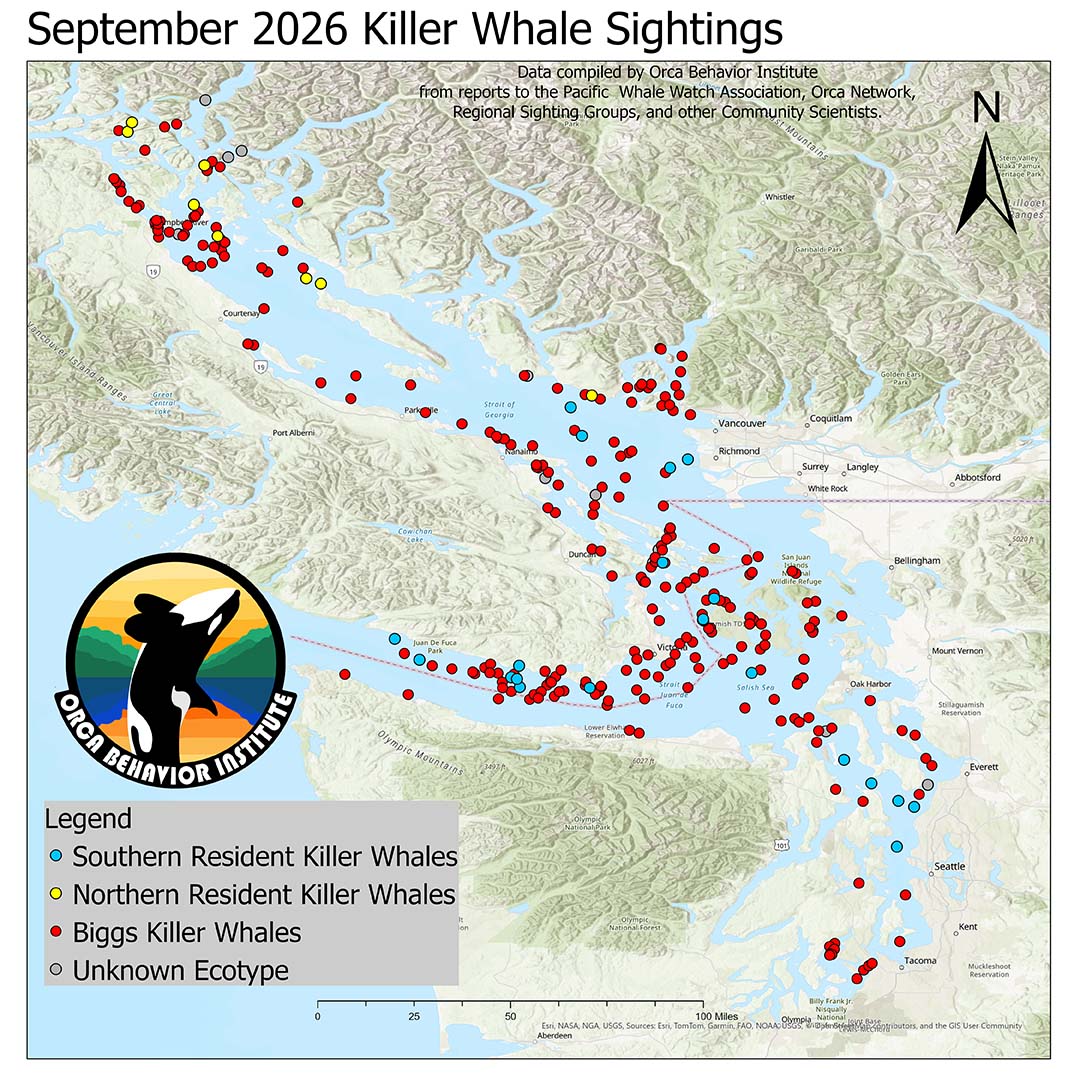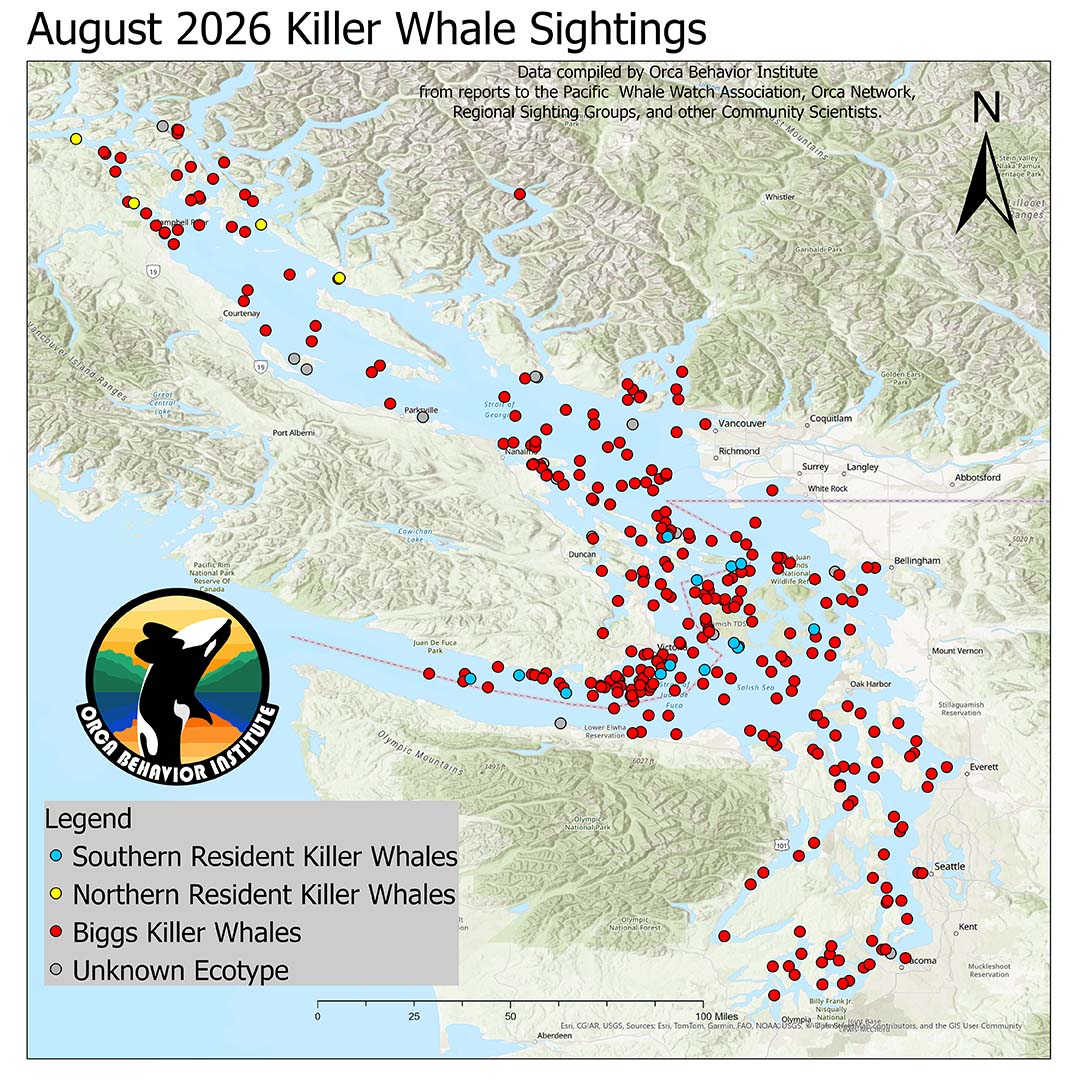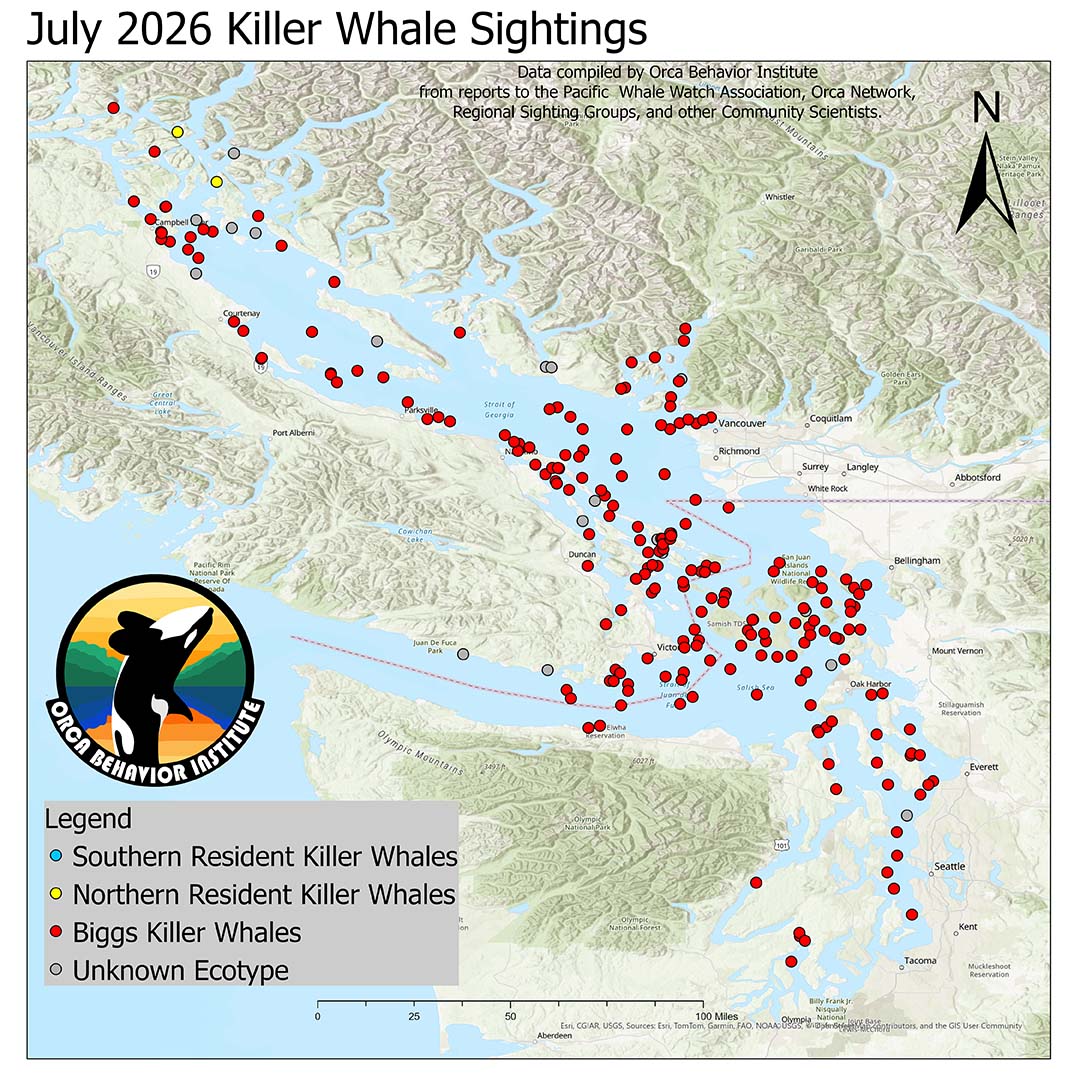
February 2026
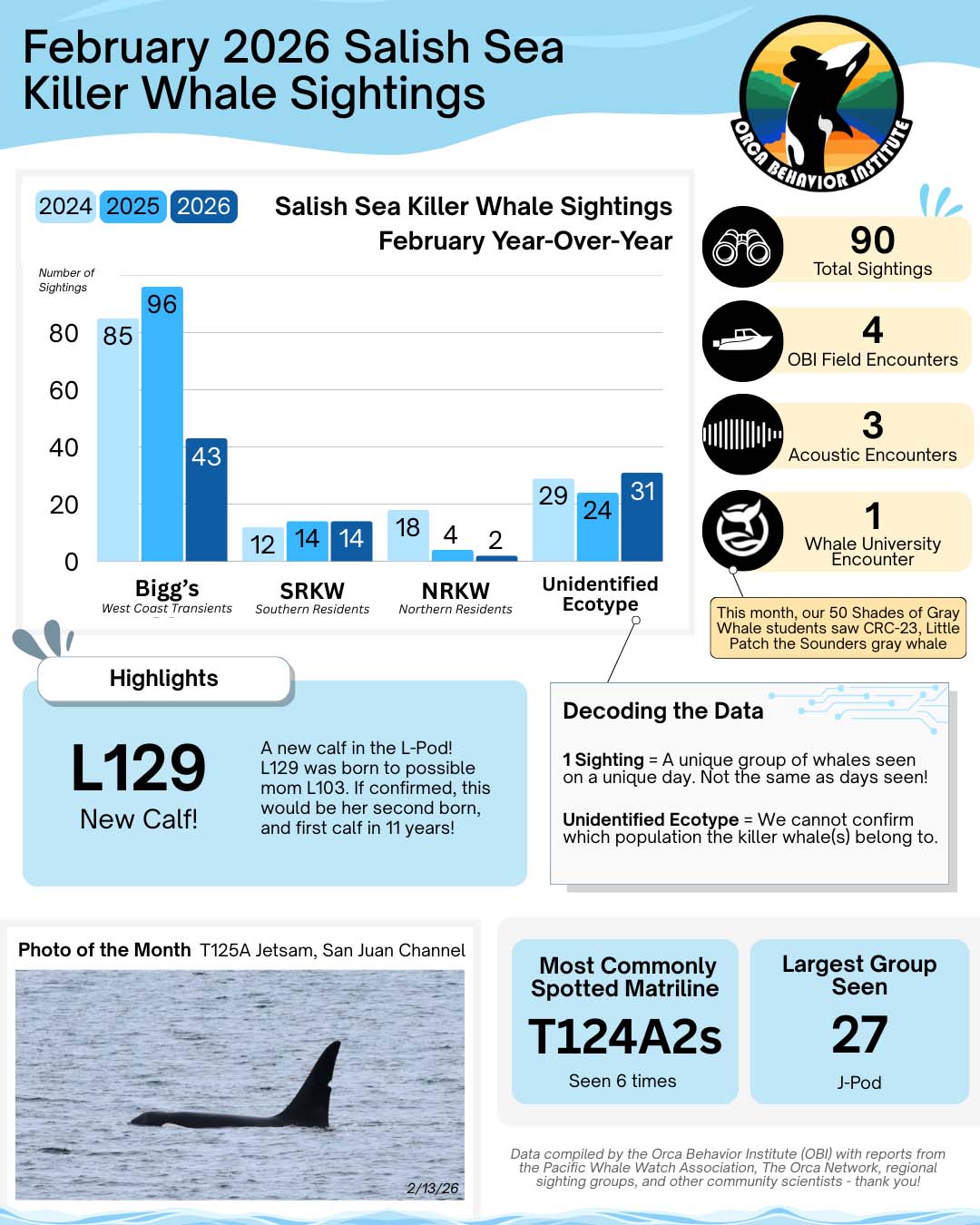
February felt like a strangely quiet month for killer whale sightings in the Salish Sea, but perhaps it's just that our memories are short: while reports were way down compared to the last two years, they were actually on par with what had been "normal" for quite a few years prior to that. Here's how it all shook out.
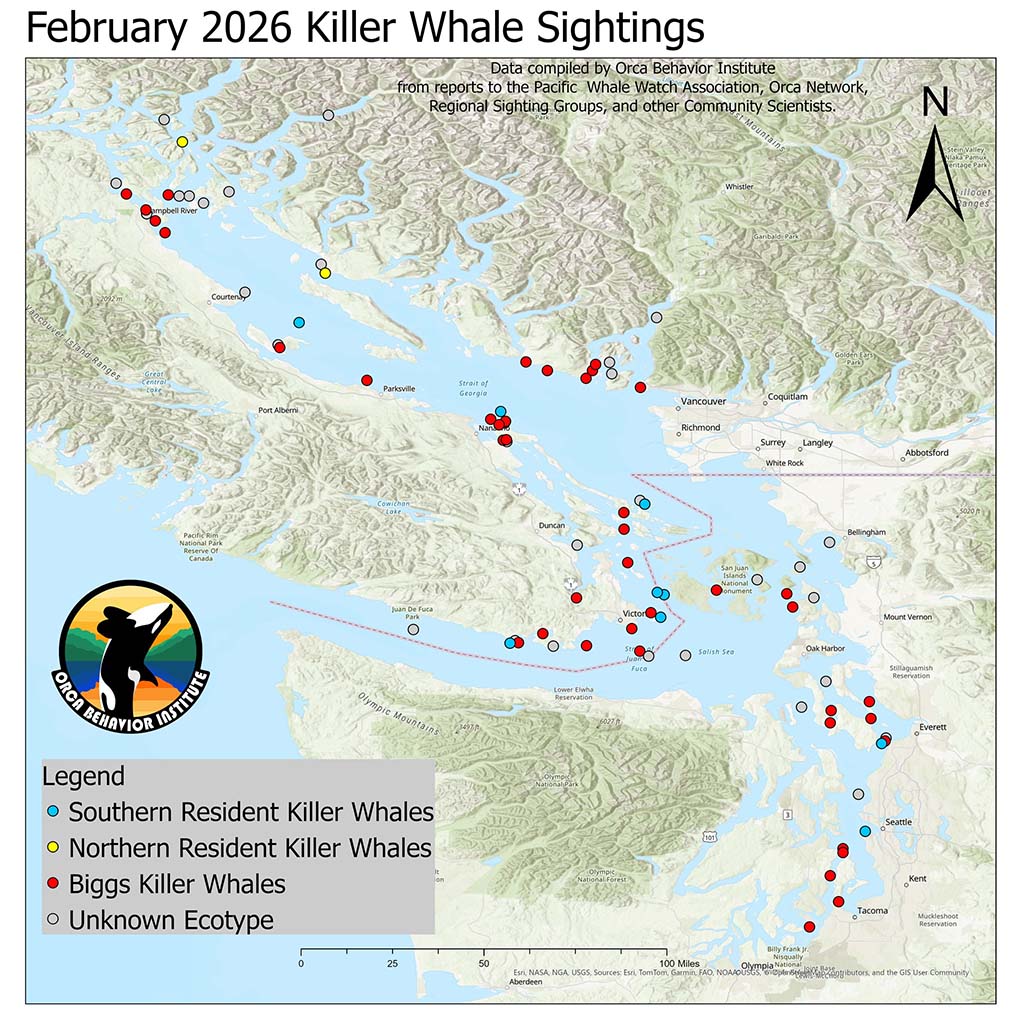
We're used to seeing all these monthly update maps painted red, representing unique reports of groups of Bigg's killer whales seen on unique days, but in February of 2026 we had 43 sightings, a drop of more than 50% compared to February 2025! That sounds shocking, but perhaps it was 2024 and 2025 that were the anomalies, with sightings in the 40s being pretty standard for the month of February. Most reports were made up of "the regulars" including the T90s, T100s, T101s, and T124A2s who were all around sporadically throughout the month.
We were able to confirm the presence of Southern Residents on 11 days of the month, right on par for the last 5 years and about double the numbers of a decade ago. As expected they passed through the San Juan Islands and made forays up into the Strait of Georgia, but they also made one visit to Puget Sound, which doesn't always happen in the month of February.
Last year it was just Js and Ks who made an appearance in February, but this year at least the Greater L4s of L-Pod did as well, with the big news for the month being the documentation of a brand new calf who has been designated L129. It's looking like the mom might be L103 Lapis, but additional encounters will be needed to confirm.
Northern Resident killer whale reports, after being lower than recent years in January, remained low in February. They were seen a couple of times in the northern reaches of the Salish Sea, but did not make any visits that we know of to the southern Sunshine Coast. We expect reports of them to zero out over the spring months until members of A5 Pod will likely return to the Salish Sea in midsummer.
The gray dots on the map, which represent reports where killer whales were present but we could not confirm ecotype, were up a little from 2025. It's very likely most of these were Bigg's, which if they had been verifiable, would have made the drop in sightings compared to last year a little less dramatic.
After a quieter winter period, we expect things to start picking up again in March. Bigg's sightings usually start their ramp up for the season, with many common families making their first Salish Sea visit of the year, and in recent years Southern Residents have been around in March a lot as well. We certainly can't wait to start spending more time in the field again ourselves; we know we're beyond lucky with how many whales we get to see, but it's been a bit of an "orca drought" for us!